
5 Ways to Prevent Leaking Private Data Through Public AI Tools

5 Ways to Prevent Leaking Private Data Through Public AI Tools

Artificial Intelligence is everywhere now — and for good reason.

Tools like ChatGPT, Gemini, and Microsoft Copilot can help your team draft emails, summarize reports, brainstorm marketing ideas, and move faster than ever before. Used correctly, AI can absolutely boost productivity.

But here’s the problem:

If your team is pasting client data, internal documents, or compliance-sensitive information into public AI tools, your business could be one copy-and-paste away from a serious cybersecurity incident.

For Tulsa-area law firms, healthcare practices, and energy companies handling regulated data, that risk isn’t just theoretical. It’s financial, legal, and reputational.

At Nomerel, we help businesses across Oklahoma, Kansas, Missouri, Arkansas, and Texas implement secure, compliant IT and AI strategies.

Let’s talk about how to use AI the right way — without exposing your business to unnecessary risk.


Why Public AI Tools Can Be a Data Security Risk

Many public AI platforms use submitted data to improve and train their models. That means information entered into free or personal accounts could be stored, retained, or used in ways your business doesn’t fully control.

For companies handling:

  • Personally Identifiable Information (PII)
  • Protected Health Information (PHI) under HIPAA
  • Financial or PCI-regulated data
  • Proprietary legal strategies
  • Confidential energy infrastructure data

…this becomes a compliance and cybersecurity issue fast.

And this isn’t hypothetical.

In 2023, Samsung employees accidentally pasted confidential semiconductor source code and internal meeting content into ChatGPT. It wasn’t a cyberattack. It was human error. The result? A company-wide ban on generative AI tools.

One mistake. Massive consequences.

For small to mid-sized businesses, especially those with 10–50 employees, a similar incident could mean regulatory fines, client loss, or long-term reputation damage.

The good news? This is preventable.


5 Ways to Prevent AI-Related Data Leaks

Here are five practical strategies to secure your interactions with AI tools and build a culture of security awareness.


1. Establish a Clear AI Usage & Security Policy

If you don’t define the rules, your employees will make their own.

A formal AI security policy should clearly outline:

  • What qualifies as confidential or regulated data
  • What information must never be entered into public AI tools
  • Approved AI platforms and account types
  • Consequences for non-compliance

For healthcare practices, that includes HIPAA-protected data.
For law firms, that includes client case details.
For energy companies, that includes operational and infrastructure data.

Policies should be included in onboarding and reviewed quarterly. AI is evolving quickly — your policies should too.

Proactive IT support isn’t just about firewalls. It’s about governance.


2. Require Business-Grade AI Accounts

Free AI tools often include terms allowing data to be used for model training.

Business-tier versions like:

…typically include contractual assurances that your data is not used to train public models.

That’s a critical difference.

Upgrading isn’t about fancy features. It’s about legal protection, compliance alignment, and data privacy guarantees.

3. Implement Data Loss Prevention (DLP) with AI Prompt Monitoring

Even with policies in place, mistakes happen.

That’s why proactive cybersecurity matters.

Modern Data Loss Prevention (DLP) solutions like Microsoft Purview or Cloudflare DLP can:

  • Monitor prompts and uploads in real time
  • Detect sensitive data patterns (SSNs, credit card numbers, PHI)
  • Block or redact information before it reaches an AI platform
  • Log and report attempted violations

This is especially important for businesses with compliance requirements like HIPAA, PCI, or industry-specific regulations.

Think of DLP as a safety net. It catches the “accidental copy-and-paste” before it becomes a breach.


4. Provide Ongoing, Practical AI Security Training

A policy sitting in a shared drive doesn’t protect your business.

Your team needs real-world training.

That means:

  • Teaching employees how to de-identify data before using AI
  • Running scenario-based workshops
  • Explaining compliance implications in plain language
  • Reinforcing security as part of everyday workflow

When your staff understands why something is risky — not just that it’s “against policy” — behavior changes.

Security awareness isn’t a one-time event. It’s a culture.

That’s why Nomerel offers structured Cybersecurity Awareness Training designed specifically for growing businesses that need to reduce human error, strengthen compliance, and protect sensitive data. If you want your team to confidently use tools like AI without putting your organization at risk, explore our training program here: https://nomerel.com/cybersecurity-awareness-training/

5. Build a Culture of Proactive Security

The most secure organizations don’t rely on a single tool. They build shared accountability.

Leadership sets the tone. When executives model secure AI practices and encourage questions, employees feel comfortable flagging concerns before they become incidents.

Cybersecurity is not just the IT department’s responsibility.

It’s everyone’s.

And for small to mid-sized businesses in Tulsa and surrounding regions, that cultural shift is often the difference between staying protected and scrambling after a breach.


Make Secure AI Adoption Part of Your IT Strategy


AI is not going away. In fact, it’s becoming a competitive necessity.

But adopting AI without guardrails can introduce compliance gaps, data exposure, and operational risk — especially in regulated industries like legal, healthcare, and energy.

That’s why Managed IT Support should include:

  • Clear AI governance policies
  • Business-grade AI configuration
  • Data Loss Prevention tools
  • Compliance alignment (HIPAA, PCI, and more)
  • Ongoing cybersecurity training

At Nomerel, we help Tulsa-area businesses implement proactive IT strategies that reduce downtime, protect sensitive data, and create predictable, secure technology environments.

If your team is already experimenting with AI — or actively integrating it into daily workflows — now is the time to formalize your approach. Before risks turn into compliance issues or security gaps, make sure your infrastructure, policies, and protections are truly ready.

Start with our AI Readiness Assessment to evaluate your current safeguards, identify vulnerabilities, and build a secure roadmap for adoption: https://nomerel.com/ai-readiness-assessment/

Prefer to talk it through? Reach out to our team at Sales@Nomerel.com or 918-770-4099.

Let’s protect your data while empowering your team to work smarter.


Faith Morgan

Author, Marketing Coordinator at Nomerel

Faith is a dynamic marketing professional with over 9 years of experience in content marketing, social media strategy and video production. An avid traveler and outdoor enthusiast, she draws inspiration from exploring new places, enriching her storytelling approach. At Nomerel, she enhances communication, streamlines processes, and supports the company’s mission to provide exceptional IT solutions.
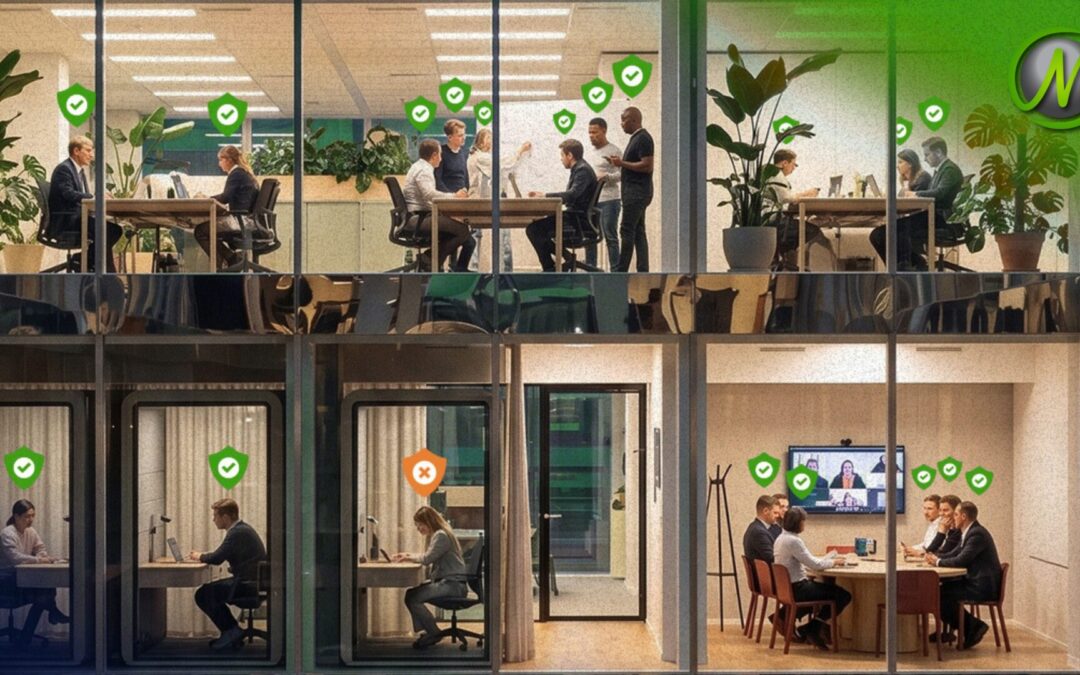

How AI Helps Businesses Scale Without Adding Complexity

How AI Helps Businesses Scale Without Adding Complexity

Growth should feel like momentum — not mayhem.

For many growing businesses in Tulsa and Oklahoma City, scaling introduces friction instead of freedom. More customers bring more requests. More employees mean more onboarding, tools, and internal questions. Before long, teams are buried in emails, Slack messages, and spreadsheets just trying to stay aligned.

That’s where AI can play a powerful role — when it’s implemented intentionally. Done right, AI helps businesses scale smarter by reducing busywork, improving visibility, and accelerating decision-making without adding unnecessary complexity.

In this post, we’ll break down why growth often feels messy, where AI can simplify your operations, and how the right IT partner helps Oklahoma businesses leverage AI securely and effectively.


Why Business Growth Starts to Feel Complicated

Business growth is exciting, but only if it’s done right.  At first, growth feels manageable. Teams adapt and things still get done.

Then the cracks appear. Productivity slows down and it becomes a struggle to keep everything straight as the pace of business speeds up.

This is the tipping point where many businesses either stall — or accelerate the right way.


AI as a Force Multiplier for Growing Businesses

AI is not about replacing people. It’s about removing the friction that keeps people from doing their best work.

When implemented strategically, AI acts as a force multiplier — handling repetitive tasks, organizing information, and supporting faster, more informed decisions. This allows businesses to scale operations without expanding headcount or overwhelming teams.

Here’s how AI helps businesses scale without chaos:

Reducing repetitive work

AI can automate tasks like scheduling, data entry, ticket routing, and documentation, freeing teams to focus on higher-value work.

Centralizing business knowledge

As organizations grow, knowledge spreads across inboxes, CRMs, chat platforms, and shared drives. AI helps surface the right information quickly, reducing time spent searching and interrupting coworkers.

Supporting faster customer responses

Customers expect speed and consistency. AI enables teams to respond accurately and efficiently, improving service without increasing workload.

Scaling without tool sprawl

Rather than adding more platforms, AI enhances the technology businesses already use, helping growth feel streamlined instead of fragmented.


Practical AI Use Cases You Can Implement Today

You don’t need a massive AI overhaul to see real results. Many small and mid-sized businesses start with focused, practical use cases.

Customer Support

AI-powered chat tools and intelligent knowledge bases can handle common questions, summarize interactions, and assist support teams in responding faster.

Sales and Marketing

AI can help qualify leads, draft follow-ups, maintain CRM data, and keep pipelines moving — all without manual effort.

Operations and Internal Workflows

AI tools can identify bottlenecks, optimize scheduling, forecast needs, and streamline internal processes so growth doesn’t strain operations.

These are not future-state concepts — they’re already helping businesses across Oklahoma operate more efficiently.


Why Simplicity Is the Key to AI Success

AI only delivers value when people actually use it.

Too often, businesses adopt powerful tools that don’t align with how their teams work. The result is confusion, low adoption, and wasted investment. Complexity doesn’t accelerate growth — it slows it down.

Successful AI strategies prioritize clarity. They integrate with existing systems, address real operational challenges, and support everyday workflows instead of disrupting them.


Not Sure If Your Business Is Ready for AI? Start Here

Many businesses know AI could help them scale — but aren’t sure where to begin. That uncertainty often leads to one of two outcomes: overinvesting in tools that don’t get used, or delaying AI altogether and falling behind competitors.

Before adopting new technology, it’s critical to understand your current readiness.

That’s why we created a 2-minute AI Readiness Assessment designed specifically for growing businesses. The assessment helps you quickly evaluate:

  • How prepared your current systems and data are for AI
  • Whether your workflows are positioned to benefit from automation
  • Where AI could deliver the most immediate impact — without adding complexity

It’s fast, straightforward, and gives you clarity on whether AI is something you should act on now or plan for strategically.

Take the 2-minute AI Readiness Assessment and get a clearer picture of how AI fits into your growth strategy: https://nomerel.com/ai-readiness-assessment/


How Nomerel Helps Oklahoma Businesses Use AI the Right Way

At Nomerel, we believe AI should simplify work — not complicate it.

As a trusted IT partner serving Tulsa, Oklahoma City, and surrounding areas, we help businesses identify the right opportunities for AI, integrate it securely into existing environments, and set realistic expectations for adoption.

Our approach focuses on:

  • Practical AI use cases tied to business outcomes
  • Secure, compliant implementations
  • Seamless integration with your current technology stack
  • Steady, intentional improvements — not rushed rollouts

The result is AI that supports long-term growth while keeping operations manageable, secure, and aligned with business goals.


Scale Smarter with Confidence

Growth doesn’t have to mean complexity. With the right strategy and the right IT partner, AI can help your business move faster, work smarter, and stay focused on what matters most.

If your business is ready to explore how AI fits into your technology roadmap, Nomerel can help. After taking the AI Readiness Assessment, reach out to our team at sales@nomerel.com to start building a growth strategy that’s simple, secure, and built to scale.


Faith Morgan

Author, Marketing Coordinator at Nomerel

Faith is a dynamic marketing professional with over 9 years of experience in content marketing, social media strategy and video production. An avid traveler and outdoor enthusiast, she draws inspiration from exploring new places, enriching her storytelling approach. At Nomerel, she enhances communication, streamlines processes, and supports the company’s mission to provide exceptional IT solutions.

Why AI Voice Cloning Is the Next Evolution of Business Fraud — and What Growing Businesses Must Do Now

Why AI Voice Cloning Is the Next Evolution of Business Fraud — and What Growing Businesses Must Do Now

Imagine answering a phone call from your CEO. The voice sounds exactly right — same cadence, same tone, same sense of urgency. They ask for a quick favor: an urgent wire transfer to secure a vendor contract or immediate access to sensitive client data. It feels familiar, and you’re ready to act.

Except it isn’t your CEO.

AI voice cloning has made it possible for cybercriminals to convincingly impersonate business leaders in real time. What used to feel like science fiction is now a practical, scalable attack method — and it’s becoming one of the fastest-growing threats facing small and mid-sized businesses.

For organizations focused on growth, this isn’t just a cybersecurity issue. It’s a business continuity and trust issue, and it demands a more accelerated, intentional approach to technology.


How AI Voice Cloning Is Reshaping the Threat Landscape

For years, cybersecurity training has focused on spotting suspicious emails — misspelled domains, strange attachments, or unfamiliar senders. But most organizations haven’t trained employees to question a familiar voice.

That’s exactly what AI voice cloning exploits.

Attackers can replicate a person’s voice using just a few seconds of publicly available audio. Executive interviews, conference presentations, webinars, social media videos, and even voicemail greetings can provide enough material. With widely accessible AI tools, cybercriminals can generate convincing voice replicas capable of delivering any message they choose.

What makes this especially dangerous is how low the barrier to entry has become. These attacks no longer require advanced technical skill — only access to recordings and a well-timed script. As AI tools continue to accelerate, so does the scale and sophistication of these scams.


The Evolution of Business Email Compromise

Traditional Business Email Compromise (BEC) attacks relied on compromised inboxes or spoofed domains to trick employees into transferring funds or sharing confidential information. Over time, improved email filtering and security awareness made these attacks easier to detect.

Voice-based attacks remove those safeguards entirely.

When a trusted executive is on the phone, sounding stressed or pressed for time, people react emotionally instead of analytically. This form of “vishing” bypasses email filters, security gateways, and even some voice authentication systems by targeting the human decision-maker directly.

AI voice cloning adds urgency and credibility in a way email never could — and that makes it far more effective.


Why “Listening Carefully” Isn’t a Strategy

Detecting audio deepfakes in real time is extremely difficult. Human ears are unreliable, and as AI improves, subtle clues like robotic tone or digital artifacts are disappearing. Relying on employees to “trust their instincts” is not a sustainable defense.

The reality is simple: technology has outpaced human detection.

Instead of asking employees to identify fake voices, organizations must implement systems and processes that remove ambiguity altogether.


Why Cybersecurity Training Must Accelerate

Many cybersecurity training programs still focus on basic password hygiene and phishing checklists, but today’s threats — especially AI-driven voice scams and social engineering — require training that’s practical, engaging, and continuous.

That’s where Nomerel’s Cybersecurity Awareness Training comes in. Built for growing businesses in Tulsa, Oklahoma and the surrounding region, this program combines professional, interactive modules with real-world simulations so your team doesn’t just understand threats — they know how to respond to them.

Nomerel’s training equips your employees with:

  • Short, easy-to-consume video lessons designed for busy teams
  • Simulated phishing attacks with real-time feedback that reinforce learning
  • Built-in quizzes and reporting so you can track progress over time
  • An Employee Secure Score dashboard that shows how risk is improving month over month
  • Optional integration with tools like Outlook and Microsoft Teams for seamless delivery

These aren’t generic checkboxes — they’re behavioral reinforcement tools that help your people think, act, and respond like defenders instead of targets. When training is designed this way, it doesn’t slow your team down — it makes them more confident, more aware, and more resilient, which accelerates your business’s ability to pursue new opportunities with less risk.

Training isn’t a one-and-done activity, either. The threat landscape is constantly shifting, so regular refreshers — combined with structured support from a provider like Nomerel — ensure your workforce stays sharp and ready.


Verification Protocols That Protect Without Slowing Growth

The most effective defense against voice cloning attacks is a strict, technology-enabled verification process.

Organizations should adopt a zero-trust approach for any voice-based request involving money, credentials, or sensitive data. Requests made by phone should always be verified through a second channel, such as an internal Teams or Slack message, a direct callback using known contact details, or an approval workflow built into financial systems.

Some businesses are also implementing challenge-response methods or predefined verification phrases for high-risk transactions. While simple, these controls add friction for attackers — not for your team.

This is where tech acceleration matters. When verification is built into workflows using the right tools, security becomes part of how work gets done, not an obstacle to growth.


The Future of Identity Verification

As AI continues to blur the line between real and synthetic identities, businesses will need stronger digital identity controls. We’re already seeing increased interest in cryptographic verification, multi-factor approval chains, and platform-level identity validation.

Until these technologies mature, the most effective defense remains intentional process design. Slowing down high-risk actions, introducing verification pauses, and removing single points of failure disrupt attackers while preserving operational efficiency.


Protecting Your Business from Synthetic Threats

The impact of deepfake attacks goes far beyond financial loss. Reputational damage, legal exposure, and loss of trust can follow — especially if a fabricated recording spreads before it can be disproven.

As AI becomes more advanced, voice scams will likely expand into real-time video and multi-channel impersonation. Organizations that wait until an incident occurs will already be behind.

At Nomerel, we help businesses across Oklahoma, Kansas, Missouri, Arkansas, and Texas build proactive, scalable security strategies that protect growth instead of slowing it down. From verification protocols to employee training and secure collaboration systems, we help turn cybersecurity into a business advantage.

Reach out to us at sales@nomerel.com or 918-770-4099 to learn more about how we can help protect your business.  Let’s make sure your technology accelerates trust, resilience, and growth — not risk.


Faith Morgan

Author, Marketing Coordinator at Nomerel

Faith is a dynamic marketing professional with over 9 years of experience in content marketing, social media strategy and video production. An avid traveler and outdoor enthusiast, she draws inspiration from exploring new places, enriching her storytelling approach. At Nomerel, she enhances communication, streamlines processes, and supports the company’s mission to provide exceptional IT solutions.

Key Tech Trends, Emerging Threats & What Digital Transformation Means for Tulsa Businesses

Key Tech Trends, Emerging Threats & What Digital Transformation Means for Tulsa Businesses

Technology isn’t slowing down — and for small to mid-sized businesses across Tulsa and the surrounding region, standing still is no longer an option. Every few months, new platforms, tools, and security threats reshape how businesses operate.

For companies in healthcare, legal, and energy, falling behind doesn’t just mean outdated systems. It can lead to downtime, compliance issues, lost trust, and expensive IT emergencies that interrupt daily operations.

At Nomerel, we see a clear divide: businesses that plan proactively with technology — and those forced to react after something breaks.

In this post, we’ll explore the digital transformation trends shaping businesses in our region, the cybersecurity threats we’re seeing most often, and why staying informed makes a measurable difference.


Digital Transformation Trends Affecting Oklahoma Businesses

Digital transformation isn’t about chasing the latest tech. It’s about building systems that support growth, reduce risk, and keep your business running when challenges arise.


Cloud Adoption for Flexibility & Continuity

More Tulsa-area businesses are moving critical systems to the cloud — not just for convenience, but for reliability.

Cloud platforms allow teams to securely access data from anywhere, scale systems without major infrastructure investments, and recover more quickly from outages caused by disaster, hardware failures, or human error.

For example:

  • Law firms rely on secure cloud document management to support hybrid work
  • Healthcare practices depend on cloud systems that maintain uptime while meeting HIPAA requirements
  • Energy companies benefit from centralized access for both office and field teams

Cloud adoption works best when security and compliance are built in from the start.


Automation That Improves Accuracy and Efficiency

Automation has also become a standard part of daily operations. Many businesses are streamlining billing, service workflows, and reporting processes to reduce manual effort and minimize errors.

In regulated industries, automation reduces human error — often the root cause of compliance issues. It also allows staff to focus on higher-value work instead of repetitive tasks.


AI Tools: Useful, but Not Risk-Free

AI is no longer experimental, but it isn’t plug-and-play either.

Businesses are increasingly using AI for data analysis, forecasting, internal knowledge management, and customer support.

Without clear controls, however, AI can introduce data exposure and compliance risks. For industries handling sensitive information, AI must be implemented intentionally — not impulsively.


Collaboration Tools Are Core Infrastructure

Collaboration technology has also become core infrastructure. Remote and hybrid work are now permanent for many teams, and cloud-based collaboration tools like Microsoft Teams and Loop support productivity and communication.

When configured properly, these tools reduce shadow IT and improve security visibility. When left unmanaged, they can quickly become another attack surface.


Cybersecurity Threats Targeting Small and Mid-Sized Businesses

Cybercriminals increasingly target SMBs because they often lack layered security and continuous monitoring.


Ransomware and Phishing Remain the Top Risks

Ransomware and phishing attacks remain the most common threats we see. Phishing emails are now more convincing than ever, often impersonating vendors or internal staff, and a single click can give attackers access to critical systems. Ransomware attacks can bring operations to a complete halt, creating financial and reputational damage that lingers long after systems are restored.

AI-Powered Scams Are Becoming Harder to Detect

Adding to the challenge, attackers continue to leverage sophisticated AI tools to scale and personalize their attacks.

In recent findings, cybersecurity researchers uncovered malicious Chrome browser extensions that stole conversations and browsing data from major AI services like ChatGPT and DeepSeek, impacting over 900,000 users worldwide. These extensions were designed specifically to exfiltrate AI chats and browsing behavior, demonstrating how attackers are weaponizing popular AI tools to bypass traditional defenses and capture sensitive information in new ways. (Read the full story here)

This incident highlights that AI-related threats are not hypothetical — they’re actively used against real users and businesses right now.

Scammers are also creating phishing emails that adapt in real time, impersonate executives with alarming accuracy, and even mimic project details pulled from social media profiles. Traditional security tools alone are no longer enough to stop these threats. Spam filtering tools like Inky can inform internal email recipients that the email appears to be a deep fake.

Modern cybersecurity requires a proactive, layered approach that includes multi-factor authentication, reliable and tested backups, ongoing employee training, and active monitoring. Cybersecurity is no longer just an IT issue — it’s a business risk that leadership teams must address directly.


Why Staying Informed Makes a Real Difference

Keeping up with technology and security trends allows businesses to make decisions before problems arise, rather than reacting under pressure.

Organizations that take a proactive approach to IT experience less downtime, more predictable costs, and smoother growth. They are better positioned to adopt new tools without disrupting operations and are far less likely to face surprise expenses caused by preventable issues.

Staying informed also reduces financial and compliance risk. Awareness of emerging threats helps businesses avoid data breaches, regulatory penalties, and emergency IT spending. Reactive IT is almost always more expensive — and more stressful — than proactive planning.

Just as importantly, strong security builds trust. Clients and patients expect their data to be protected, and businesses that take security seriously earn long-term confidence and loyalty.


Practical Steps to Get Started

Digital transformation doesn’t have to be overwhelming.

  • Automate one key process to reduce inefficiency
  • Strengthen your security foundation with MFA, backups, and training
  • Adopt cloud tools strategically, not reactively
  • Work with an IT partner who plans ahead, not just responds to issues


Build a Future-Ready IT Strategy

Nomerel helps businesses across Oklahoma, Kansas, Missouri, Arkansas, and Texas move from reactive IT to proactive, compliance-driven technology strategies.

If you’re ready to reduce downtime, strengthen security, and gain confidence in your IT decisions, we’re here to help.

Contact Nomerel at sales@nomerel.com or call 918-770-4099 to schedule a discovery call and start building IT that supports your business — not holds it back.


Take the Next Step: Join Our Live Webinar!

Want to uncover hidden risks inside your IT environment? Join us for our upcoming webinar:

Tech Health Check: What You Don’t Know CAN Hurt You
Date: January 28, 2026
Time: 11:00 AM CST

In this session, we’ll show you how to uncover hidden risks in your IT environment and implement smart strategies to protect your business.

Reserve your spot today and take the first step toward a stronger, safer IT environment for your team.


Faith Morgan

Author, Marketing Coordinator at Nomerel

Faith is a dynamic marketing professional with over 9 years of experience in content marketing, social media strategy and video production. An avid traveler and outdoor enthusiast, she draws inspiration from exploring new places, enriching her storytelling approach. At Nomerel, she enhances communication, streamlines processes, and supports the company’s mission to provide exceptional IT solutions.

Douglas Adams Steps Into HelpDesk Dispatch Role at Nomerel

Douglas Adams Steps Into HelpDesk Dispatch Role at Nomerel

Nomerel is excited to announce that Douglas Adams has joined Nomerel as a HelpDesk Dispatch Technician, where he’ll play a key role in keeping Nomerel’s HelpDesk running smoothly.

In this role, Douglas keeps a close eye on all ticket activity, helping ensure requests are moving efficiently and getting into the right hands at the right time. His work helps the entire support team stay aligned and responsive—so clients get the help they need without delays.

Douglas may also reach out to work with clients on updating documentation regarding their specific technology processes, ensuring clear support documentation for more reliable systems for the future. 

And yes—if the name sounds familiar, you’re not imagining it. While he’s not the author of The Hitchhiker’s Guide to the Galaxy, Douglas Adams is very much Nomerel’s answer to managing a galaxy full of tickets, bringing order, visibility, and calm to even the busiest HelpDesk days.


Welcome to the team, Douglas!


Faith Morgan

Author, Marketing Coordinator at Nomerel

Faith is a dynamic marketing professional with over 9 years of experience in content marketing, social media strategy and video production. An avid traveler and outdoor enthusiast, she draws inspiration from exploring new places, enriching her storytelling approach. At Nomerel, she enhances communication, streamlines processes, and supports the company’s mission to provide exceptional IT solutions.