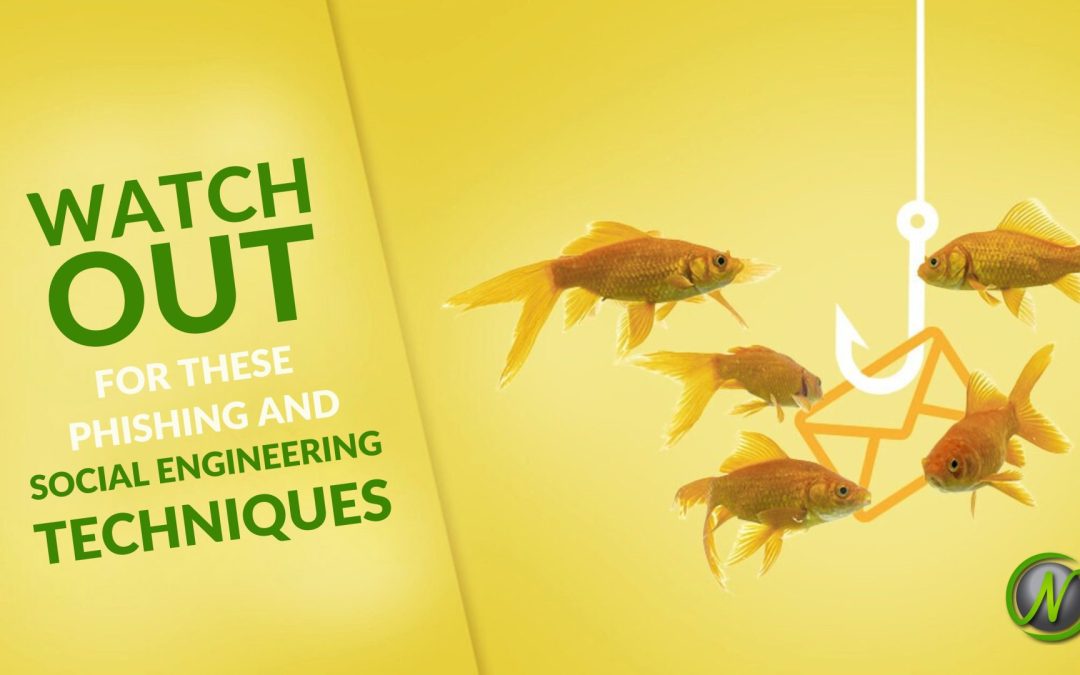
Phishing & Social Engineering: How Tulsa Businesses Can Stay Protected

Phishing & Social Engineering: How Tulsa Businesses Can Stay Protected

When most people think of cybercrime, they imagine complex code or high-tech hacking. But the most dangerous threat to your business may be far simpler: people.

Phishing and social engineering attacks don’t break into your network—they walk right in, usually through the inbox or a phone call. These tactics exploit trust, urgency, and human error, and they’re getting more sophisticated by the day.

At Nomerel, we provide managed IT support for businesses across Tulsa, Oklahoma City, and the surrounding metro areas. One of the most important conversations we have with our clients is how to build human-first defenses against these evolving threats.

What Is Social Engineering?

Social engineering is a form of manipulation where attackers pose as trusted individuals to trick employees into giving up sensitive information, downloading malware, or sending money. Unlike brute-force hacks, these attacks rely on psychology—not technology.

Here’s why that matters:
Even the most secure systems can’t protect your business if someone clicks the wrong link or shares credentials over the phone.

Why These Attacks Work

Hackers exploit instinctive human behaviors like trust, fear, urgency, and the desire to help. Here are a few of the most common psychological tactics used in social engineering:

  • Authority: Messages claiming to be from a CEO, manager, or financial officer.
    “Please wire this payment before noon.”
  • Urgency: Emails warning you to act fast.
    “Your account will be closed in 15 minutes.”
  • Fear: Messages threatening data loss or legal action.
    “Your system has been compromised—click here to secure your files.”
  • Greed or reward: Offers of refunds or unexpected gifts.
    “Click here to claim your $50 reward.”

These messages often look like regular business communication. That’s what makes them dangerous.

Phishing Tactics to Watch For

Hackers no longer rely on obvious red flags like broken grammar or sketchy email addresses. Thanks to AI and new tools, phishing tactics have leveled up:

  • URL Spoofing: Fake websites that mirror trusted ones down to the logo and branding. A user thinks they’re logging into Microsoft 365—but it’s a trap.
  • Link Manipulation: Hyperlinks that appear legitimate but redirect to malicious sites. All it takes is one careless click.
  • Link Shortening: Attackers use services like bit.ly to hide malicious URLs. If you can’t preview the destination, don’t trust it.
  • AI Voice Spoofing: One of the newest and scariest trends. Hackers use AI to mimic voices of coworkers or family members. A convincing “call from the boss” could lead to a wire transfer or leaked credentials.

How to Protect Your Business in Tulsa and Oklahoma City

If your business operates in Tulsa, Oklahoma City, or anywhere in the OKC metro, you’re not immune. Small to mid-sized companies are often targeted because they lack dedicated cybersecurity resources.

Here are steps you can take today:

  1. Educate and Train Your Team

Make security awareness part of your company culture. Train employees to spot phishing signs and understand psychological manipulation tactics.

  1. Verify Requests

Before transferring money or sharing credentials, always verify requests through a secondary channel—like a phone call to a known number or an in-person check.

  1. Slow Down

Encourage your team to pause when faced with urgent or unusual messages. A 30-second delay could prevent a costly mistake.

  1. Use Multi-Factor Authentication (MFA)

Even if credentials are compromised, MFA adds a second line of defense.

  1. Report Suspicious Activity

Create a process for employees to quickly and easily report anything suspicious—emails, texts, phone calls, and more.

Work With a Trusted Local IT Company

Cybercriminals don’t care how big your company is or what industry you’re in. They only care about access—and they’ll do whatever it takes to get it.

That’s why businesses across Tulsa and Oklahoma City trust Nomerel for managed IT support, cybersecurity, and employee training. We help companies build proactive defenses and respond fast when threats arise.

Let us help you create a human-first cybersecurity strategy that fits your team. Contact us today for a free consultation or learn more about our IT services across Oklahoma, including the Tulsa and OKC metro areas.

Photo of the author Faith Morgan

Faith Morgan

Author, Marketing Coordinator at Nomerel

Faith is a dynamic marketing professional with over 9 years of experience in content marketing, social media strategy and video production. An avid traveler and outdoor enthusiast, she draws inspiration from exploring new places, enriching her storytelling approach. At Nomerel, she enhances communication, streamlines processes, and supports the company’s mission to provide exceptional IT solutions.
Protecting Your Business from Cyberattacks: A Comprehensive Guide

Protecting Your Business from Cyberattacks: A Comprehensive Guide

In today’s digital landscape, businesses in Oklahoma and surrounding areas increasingly rely on online platforms and IT infrastructure. While this connectivity offers numerous advantages, it also exposes organizations to heightened cybersecurity risks. Cyberattacks can compromise sensitive data, including customer names, social security numbers, credit card information, and addresses, leading to financial losses and reputational damage.

The Critical Role of End Users in Cybersecurity

While businesses often focus on securing their systems and networks, it’s essential to recognize that end users—the employees, contractors, and even customers—are the most critical and vulnerable part of any cybersecurity strategy. In fact, human error is one of the primary causes of data breaches and other cyber incidents. Whether it’s falling for a phishing scam, reusing weak passwords, or neglecting software updates, end users often provide the easiest entry point for cybercriminals.

As a business owner or manager, it’s imperative to implement robust cybersecurity protocols and foster a culture of security awareness within your organization. Employees must understand their role in safeguarding sensitive information and mitigating potential risks.

Understanding Cyberattacks

A cyberattack involves unauthorized access to computer systems or networks, aiming to disrupt, disable, or steal data. These attacks can originate from various sources and employ multiple tactics. Cybercriminals often target businesses for financial gain, seeking to exploit vulnerabilities in IT systems.

Common Motivations Behind Cyberattacks

  • Financial Gain: Attackers may steal sensitive information to commit fraud or demand ransom payments after encrypting critical data.
  • Revenge: Disgruntled former employees might attempt to harm a company’s reputation or operations.
  • Cyberwarfare: Nation-states may engage in cyberattacks as part of political or economic conflicts.

Prevalent Types of Cyberattacks

  1. Malware: Malicious software designed to damage or disrupt systems. Examples include trojans, ransomware, and spyware. Malware can steal private information, restrict file access, and cause significant downtime.
  2. Phishing: Deceptive emails or messages trick users into revealing sensitive information or clicking malicious links, often appearing to come from trusted sources.
  3. Man-in-the-Middle (MitM): Intercepting communications between two parties to steal data without their knowledge. This can be especially dangerous during financial transactions.
  4. Distributed Denial-of-Service (DDoS): Overwhelming servers with excessive traffic to cause disruptions. These attacks are often used as a distraction for larger breaches.
  5. SQL Injection: Exploiting database vulnerabilities by inserting malicious code, potentially exposing or deleting critical data.
  6. Zero-Day Exploits: Attacks that target previously unknown vulnerabilities before developers have a chance to fix them.
  7. Drive-by Downloads: Malware automatically downloaded from compromised websites without the user’s knowledge.
  8. Credential-Based Attacks: Unauthorized access using stolen usernames and passwords, often obtained through phishing or data breaches.
  9. Brute-Force Attacks: Using trial-and-error to guess login credentials, eventually gaining unauthorized access if successful.

8 Essential Steps to Safeguard Your Business

  1. Regular Data Backups
    Implement the 3-2-1 backup strategy: three copies of your data, on two different types of media, with one stored offsite. Use daily incremental backups, weekly and monthly full backups, and ensure all data can be successfully restored when needed. Avoid leaving backup devices connected to the primary network to reduce exposure to malware.
  2. Secure Networks and Devices
    Update all systems and software regularly, install trusted security software, and set up firewalls to act as gatekeepers between your internal network and the internet. Enable spam filters to minimize phishing emails and malicious attachments. Ensure that firewalls are also installed on mobile devices used for business.
  3. Encrypt Sensitive Information
    Encryption transforms data into unreadable code that can only be accessed with the correct decryption key. Use encryption protocols for data in transit and at rest. Some software can even alert you when data is tampered with.
  4. Implement Multi-Factor Authentication (MFA)
    MFA adds a layer of protection by requiring users to verify their identity with two or more authentication factors. While it may seem inconvenient, it significantly reduces the risk of unauthorized access.
  5. Adopt Strong Passphrases
    Replace simple passwords with passphrases—strings of random or unrelated words mixed with numbers and symbols. A strong passphrase should contain at least 14 characters, combining uppercase, lowercase, digits, and symbols.
  6. Monitor System and Equipment Usage
    Maintain an inventory of all software and hardware used within your organization. Retire unused devices, wipe sensitive data, and disconnect them from the network. Promptly revoke access for former employees or those who no longer need it in their role.
  7. Educate Employees on Cybersecurity
    Your employees are the first line of defense. Provide training on creating secure passphrases, identifying phishing attempts, and responding to security incidents. A cyber-aware team is less likely to fall victim to attacks.
  8. Consult Cybersecurity Professionals
    Not sure where to begin? Managed IT services providers like Nomerel offer expert guidance to help you assess vulnerabilities, implement defenses, and stay compliant with evolving security standards. Partnering with professionals ensures a tailored, proactive approach to your company’s cybersecurity.

Partnering with Nomerel for Cybersecurity in Oklahoma


At Nomerel LLC, headquartered in Tulsa, Oklahoma, we specialize in providing top-tier managed IT services and cybersecurity solutions for businesses throughout Oklahoma, Kansas, Missouri, Arkansas, and Texas. We understand that your employees are the frontline in protecting your company from cyber threats, which is why we offer comprehensive training and support to ensure they are equipped to identify and respond to potential risks.

For proactive IT support, secure data management, and cutting-edge cybersecurity solutions, contact Nomerel at (918) 770-4099 or visit nomerel.com/contact.

Don’t wait until it’s too late. Protect your business, your data, and your reputation by partnering with Nomerel today!

By focusing on both technological defenses and employee education, you can create a cybersecurity culture that minimizes risks and protects your business from the growing threat of cyberattacks.

Is My Computer Up to Date? Why It Matters for Cybersecurity

Is My Computer Up to Date? Why It Matters for Cybersecurity

In today’s digital landscape, having an updated computer is crucial for robust IT services and cybersecurity. An outdated computer not only jeopardizes your sensitive data but also undermines effective IT support. Cybercriminals actively exploit vulnerabilities in old operating systems, browsers, and applications to gain access to sensitive data. Despite this, many businesses and users—whether in Tulsa, Oklahoma or beyond—overlook critical updates, leaving their systems at risk.

At Nomerel, a leader in managed IT services and Tulsa IT support, we often hear the common question: “Is my PC outdated?” If you’re unsure, your system could be exposed to cyber attacks and performance issues. Here’s why keeping your computer up to date is essential for both personal and business cybersecurity, and how you can do it quickly and effectively.

The Security Risks of Outdated Systems


Every year, hackers discover new vulnerabilities in operating systems and software. When a security hole is found, developers release patches and updates to fix these weaknesses. However, if your computer remains outdated, these vulnerabilities remain open, giving attackers an opportunity to exploit them. This is a common concern for those asking, “how can businesses prevent cyber attacks?”

Some of the most common risks associated with outdated systems include:

  • Unpatched Vulnerabilities: Hackers target known security flaws in outdated operating systems and applications to gain unauthorized access to systems.
  • Increased Malware Risk: Ransomware, spyware, and other types of malware often exploit outdated software to infiltrate devices and networks, challenging even the best IT services.
  • Loss of Support: Older versions of Windows, macOS, and other software eventually stop receiving updates. Without managed IT services or regular IT support, businesses find themselves exposed to risks.
  • Phishing & Credential Theft: Unpatched browsers and email clients can expose users to phishing attacks, where cybercriminals steal login credentials and other sensitive data.
  • System Instability & Performance Issues: Older software can slow down your computer, crash frequently, or become incompatible with new applications and security protocols.

How to Ensure Your System is Secure:


If you’re wondering, “Is my PC outdated?” or questioning how your business can prevent a cyber attack, follow these steps to verify and improve your system’s security:

1. Enable Automatic Updates

The easiest way to stay secure is to allow automatic updates for your operating system, security software, and key applications. Most modern systems and IT services include this feature, ensuring you receive critical patches as soon as they are released.

2. Check for Operating System Updates

    • Windows: Go to Settings > Windows Update and click Check for Updates. If updates are available, install them immediately.
    • Mac: Open About this Mac > Software Update to check if a new macOS version is available.

3. Update Software & Web Browsers

Outdated applications and browsers pose significant risks. Check for updates in the Microsoft Store, Apple App Store, or the software’s settings menu. Ensuring that your web browser (Chrome, Edge, Firefox, or Safari) is updated is key to robust IT support and cybersecurity.

4. Upgrade Your Security Software

Your antivirus, firewall, and other security programs must be updated regularly to detect and defend against new threats. Cybercriminals develop new attack techniques daily, making frequent updates a necessity rather than an option—an essential aspect of managed IT services.

5. Replace Outdated Hardware

Even if your software is updated, older hardware may not support the latest security features. If your computer is slow, experiencing frequent crashes, or running an operating system that no longer receives updates (such as Windows 7 or an older MacOS), it may be time for an upgrade. Businesses in Tulsa, Oklahoma should consider this an essential step when looking for comprehensive IT support.

6. Use a Patch Management Solution

Manually updating multiple systems can be time-consuming. At Nomerel, we offer a patch management solution that automates software updates across your network, ensuring that all devices remain secure without disrupting daily operations. This is particularly useful for administrators managing multiple workstations and is a key service offered through our managed IT services.

7. Monitor Update Logs and Security Alerts

Even with automatic updates enabled, it’s crucial to monitor update logs and security alerts from software providers. Sometimes, updates fail to install properly, leaving vulnerabilities unpatched. Regularly checking system logs and subscribing to cybersecurity advisories will help you stay informed about critical updates and emerging threats.

8. Backup Important Data Before Updating

While updates are essential, they can occasionally cause system conflicts or software issues. Before performing major updates, our team at Nomerel will create a backup of your critical files using cloud storage, an external hard drive, or a network-attached storage (NAS) device. This ensures that you can recover your data if an update causes unexpected problems—a best practice in IT support.

Protect Your Business with Proactive IT Support


Cybersecurity threats are constantly evolving, and outdated systems are a prime target for attacks. Keeping your computers up to date is one of the most effective ways to protect your business from data breaches, malware infections, and system failures.

At Nomerel, we provide proactive IT support and comprehensive managed IT services to help businesses in Tulsa, Oklahoma maintain secure, up-to-date systems. Whether you need assistance with updates, security monitoring, or full-scale IT services, our team ensures that your business stays ahead of cyber threats.

Don’t wait until it’s too late! Contact our expert team today to schedule a security assessment and keep your technology protected. Stay secure. Stay updated. Stay ahead.

Cybersecurity Essentials for Small Businesses: Staying Ahead of Evolving Threats

Cybersecurity Essentials for Small Businesses: Staying Ahead of Evolving Threats

A globe with multiple lock icons with text that reads "cyber threats are evolving - is your business ready?"

With modern technology progressing at a rapid speed, and cyber threats along with them, businesses can no longer afford to turn a blind eye to cybersecurity.  Small businesses, often perceived as low-hanging fruit, are prime targets for cybercriminals who exploit vulnerabilities such as outdated software, weak passwords, and unprotected networks.

At Nomerel, we believe that every business, no matter its size, has the potential to protect itself from cyber threats. By understanding and implementing the basics of cybersecurity, you can significantly reduce your vulnerability and safeguard your organization from becoming a hacker’s next victim.

The Growing Cybersecurity Threat Landscape


Cyberattacks are on the rise, and small businesses are increasingly in the crosshairs. Why? Hackers often assume that these businesses lack the resources to implement robust security measures. According to recent reports:

  • 43% of cyberattacks target small businesses.
  • 60% of small businesses that suffer a cyberattack close their doors within six months.

The costs are staggering—from financial losses and reputation damage to operational downtime. The average cost of a data breach in 2023 exceeded $4.45 million, making proactive cybersecurity measures not just advisable but essential.

Understanding the Hacker Mindset: Why They Target Small Businesses


Hackers are opportunists. They focus on targets with the weakest defenses, exploiting vulnerabilities such as:

  • Outdated software.
  • Weak or reused passwords.
  • Unprotected networks.
  • Employees unaware of phishing scams.

Becoming a low-hanging fruit means leaving these vulnerabilities unaddressed. At Nomerel, our mission is to help businesses recognize and close these gaps, ensuring you’re not an easy target.

Common Cyber Threats Small Businesses Face


Understanding the threats you’re up against is the first step to building a resilient defense. Here are some of the key dangers small businesses need to address:

Juice Jacking

Public charging stations may seem convenient, but they can harbor hidden dangers. Cybercriminals can install malware on these stations, infecting any device plugged in. Once infected, attackers can access sensitive data or even control your device remotely.

Protective Measures:

    • Use only trusted charging stations.
    • Employ a USB data blocker to prevent malware infections.
    • Ensure devices are set to “charging” mode, not “data transfer” mode.

Malware-Laden Apps

The rise of mobile apps has also led to an increase in malicious applications that can infect devices, steal personal data, and even crash systems.

Protective Measures:

    • Download apps only from trusted developers and official app stores.
    • Check reviews and ratings before installation.
    • Regularly update all installed apps to ensure they have the latest security patches.

Malicious QR Codes

QR codes offer convenience but can also be used by hackers to direct unsuspecting users to malicious sites or install malware.

Protective Measures:

    • Use reputable QR code scanners that check for malicious content.
    • Avoid scanning codes from unknown or untrusted sources.

Using Public Wi-Fi Without a VPN

Public Wi-Fi networks are notorious for being insecure, providing an easy avenue for hackers to intercept sensitive data.

Protective Measures:

    • Always use a Virtual Private Network (VPN) when connecting to public Wi-Fi.
    • Avoid accessing sensitive accounts or conducting financial transactions on unsecured networks.

Cybersecurity Basics: Strengthening Your Defense


Here are fundamental practices every small business should adopt to mitigate cyber risks:


  1. Keep Software Up-to-Date Outdated software is a common entry point for hackers. Regular updates patch vulnerabilities, closing the door on potential attacks.
    • Enable automatic updates for operating systems and applications.
    • Check for updates for hardware devices like routers and firewalls.
  2. Strengthen Passwords and Use Multi-Factor Authentication (MFA) Though many people prefer to use the same password across accounts, weak or reused passwords are a major security risk. Instead, use a different password for each account and employ MFA to add an extra layer of protection. Best practices include:
    • Require complex passwords with a mix of letters, numbers, and symbols.
    • Use a password manager to avoid reusing credentials.
    • Implement MFA for all critical systems and accounts.
  3. Train Employees on Cybersecurity Awareness Employees are your first line of defense against threats like phishing scams.  Without well-trained employees, they can easily fall victim to the ploys of a hacker.  To maintain cybersecurity:
    • Conduct regular training sessions on identifying suspicious emails and links.
    • Foster a culture of cybersecurity where employees feel confident reporting potential threats.
  4. Secure Your Network A secure network is critical to protecting sensitive data.  Make sure to follow these steps to secure the data of your company:
    • Use firewalls to block unauthorized access.
    • Encrypt sensitive data during transmission.
    • Provide secure VPNs for remote workers.
  5. Back Up Your Data Just because a security breach has not happened to you does not mean it will never happen.  Regular backups are essential for recovering from ransomware attacks or data loss.
    • Follow the 3-2-1 rule: Keep three copies of your data, on two different types of storage, with one copy off-site.
  6. Monitor for Suspicious Activity Early detection is key to mitigating damage from cyber threats.  The best way to prevent a cyber-attack is to:
    • Use monitoring tools to identify unusual activity.
    • Partner with an IT provider like Nomerel for 24/7 monitoring and threat detection.

Advanced Cybersecurity Measures for Forward-Thinking Businesses


For those ready to go beyond the basics, advanced strategies like Zero Trust Architecture and AI-driven threat detection can provide robust protection. Zero Trust assumes that no user or device is trustworthy by default, requiring strict verification for access. AI tools can identify patterns and potential threats, adding another layer of defense.

How Nomerel Can Help


At Nomerel, we specialize in crafting tailored cybersecurity solutions for small businesses. Our services include:

  • Customized Security Plans: We evaluate your unique needs to implement effective, scalable defenses.
  • Proactive Monitoring: Our team provides round-the-clock threat detection and response.
  • Employee Training: Equip your team with the knowledge to recognize and mitigate risks.
  • Compliance Support: Stay aligned with industry standards like HIPAA, PCI DSS, or CMMC.

Take the First Step Toward Cyber Resilience


Don’t let your business become low-hanging fruit for cybercriminals. By addressing common threats, implementing cybersecurity basics, and partnering with experts like Nomerel, you can protect your data, maintain customer trust, and ensure long-term success.

Ready to strengthen your cybersecurity strategy? Contact Nomerel today for a consultation. Let’s work together to secure your business against the evolving threat landscape.